


Most operators choose a frozen supplier the same way: they compare a handful of line prices, pick the cheapest credible option, and find out over the following year whether it was a good decision.
It is an understandable approach and a poor one, because price per case is only one of the four things that determine what frozen product actually costs you. The other three — how it arrives, how much freezer space it consumes, and how much of it reaches a plate — are invisible on an invoice and considerably more expensive when they go wrong.
This is a framework for assessing a frozen distributor properly, and the questions worth asking before you commit.
1. Cold chain integrity is the whole product
A frozen product is not a stable thing that happens to be cold. It is a product whose quality is entirely dependent on never having warmed up. Every partial thaw forms larger ice crystals, ruptures cell structure and degrades texture — and none of it is reversible when the product refreezes.
The damage is also invisible at delivery. A case of dumplings that spent forty minutes on a warm loading bay looks identical to one that did not. You discover the difference when the wrappers split in the steamer three weeks later.
What to look for:
-
Temperature-controlled vehicles and monitoring, not just refrigerated boxes
-
Delivery discipline — product moved from vehicle to freezer promptly rather than left on a bay
-
Evidence of storage standards at the distributor’s own facility
-
Willingness to discuss it — a supplier who treats cold chain questions as routine is a supplier who has answers
On your side, the same discipline applies. Frozen deliveries should be checked and put away first, before ambient stock. It is the single cheapest quality improvement available to most kitchens.
2. Freezer space is a fixed asset — treat it like one
Freezer capacity is one of the few things a kitchen genuinely cannot expand without capital spend. Every case in it should be earning its footprint.
This produces a useful discipline: judge frozen lines by revenue per cubic foot of freezer, not by cost per case.
A case of dim sum that turns over three times a week is worth far more of your freezer than a case of something specialist that turns over monthly, even if the specialist item has a higher gross margin per portion. Slow-moving frozen stock is capital sitting in a cold box.
Three practical consequences:
Prefer suppliers with multiple formats of the same product. Being able to buy a 240g pack rather than a 600g bag for a slow line keeps your freezer efficient.
Consolidate deliveries. Fewer suppliers means fewer part-cases of similar things and better use of space.
Review the freezer quarterly. Anything that has been in there for more than a couple of months is telling you something about your menu.
3. Yield is where the real cost sits
The most expensive frozen product is the one that arrives cheap and reaches the plate at eighty percent of its weight.
Yield losses come from several places: excess glaze or ice on seafood, breakage in transit, products that shrink disproportionately when cooked, and portion variability that forces you to over-serve to be safe.
The test is simple and worth doing once with any new supplier. Take a case, cook it exactly as you would in service, and count what actually leaves the pass. Compare that to what you paid. A supplier whose product costs eight percent more per case but yields fifteen percent more usable portions is the cheaper supplier, and no price list will tell you that.
Portion-controlled frozen products — dumplings, fish balls, gyoza, pre-filled bao — have a structural advantage here. You are buying countable units, so the yield is knowable in advance rather than discovered afterwards.
4. Range depth decides how much you can grow
A distributor that carries one part of the frozen category forces you to hold multiple accounts, multiple minimums and multiple delivery days.
The depth worth looking for in an Asian frozen range covers several distinct areas:
-
Dim sum — ha kau, siu mai, wonton and mixed selections
-
Handhelds — gyoza in several fillings, filled bao, gua bao, mantou
-
Pastry and components — spring roll pastry in multiple sizes, wonton pastry, dumpling pastry, so kitchens that want to build their own can
-
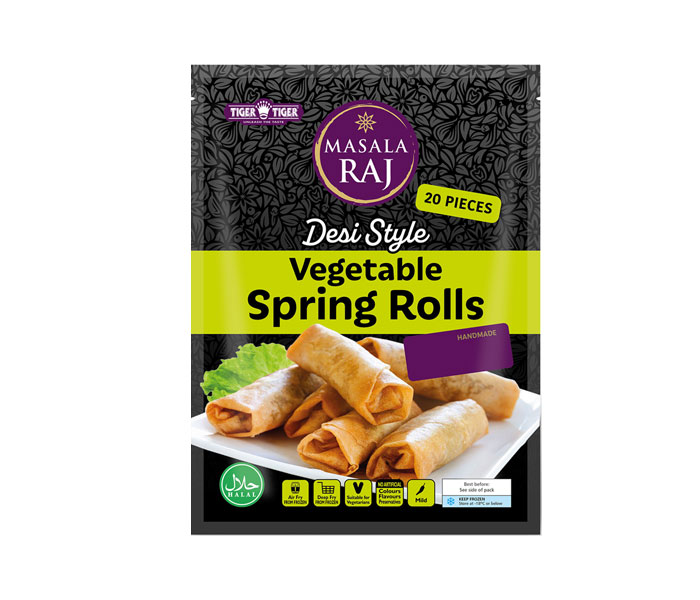
Ready-made snacks — spring rolls and samosas in vegetable and meat variants for high-volume, low-skill applications
-
Surimi and hot pot — fish balls, fish tofu, chikuwa, steamboat selections
-
Aromatics and vegetables — lemongrass, galangal, lime leaves, taro, edamame, bitter melon
-
Desserts — durian, coconut, mango and adzuki formats
That breadth is what lets a single order support a menu change rather than just a restock. A wholesale frozen Oriental food distributor carrying all of these together removes a great deal of administrative friction from running a pan-Asian kitchen.
The pastry lines deserve a specific mention. A kitchen with the skill and labour to fold its own spring rolls, wontons and dumplings can differentiate itself substantially — and buying the pastry rather than making it keeps that achievable. Being able to buy both the finished product and the components from one place lets you make that build-or-buy decision dish by dish rather than supplier by supplier.
5. Commercial flexibility: case, pallet, and everything between
The final question is whether the supplier can grow with you.
Case quantities suit independents and new sites testing a range. Mixed pallets suit established multi-site operators wanting the lower unit cost without committing to a full pallet of one line. Full pallets suit manufacturers, large groups and secondary wholesalers.
A distributor that offers only one of these is a distributor you will outgrow or under-use. The useful question at the outset is not “what is your minimum order” but “how does this arrangement change when my volume doubles”.
A checklist before you commit
Ten questions, answerable in a single conversation:
-
How is temperature maintained and monitored in transit?
-
What are your standard delivery days for my area?
-
Can I buy this product in more than one pack format?
-
Will you supply current product specifications and allergen declarations?
-
What is your process if a product is reformulated or substituted?
-
Can I order a small quantity to trial a line?
-
Do you offer case and pallet quantities?
-
What is the lead time on a standard order?
-
How is stock availability communicated before a delivery?
-
Who do I speak to when something goes wrong?
The answers to nine and ten matter more than most buyers expect. Every supply relationship has a bad week; the difference between suppliers is what happens during it.
Frequently asked questions
How often should frozen deliveries arrive? It depends on freezer capacity and turnover more than anything else. Weekly suits most single-site operators; multi-site groups with central storage often move to less frequent, larger deliveries for the unit cost saving.
Is buying frozen genuinely cheaper than fresh equivalents? For Asian ingredients in the UK, usually yes — once waste, prep labour and supply reliability are costed. The comparison is rarely close for aromatics, dumplings and surimi.
What temperature should a commercial freezer hold? Follow the guidance applicable to your business and the product specifications you hold. The more important operational point is stability: a consistently maintained freezer preserves quality far better than one that fluctuates.
Can I mix frozen and ambient products on one order? Many distributors handle both, which is a meaningful advantage when your sauces, noodles and frozen lines arrive together on one delivery and one invoice.
What should I do if a delivery arrives above temperature? Refuse or quarantine it and record it. This should be a documented procedure rather than a decision made under time pressure at the back door.