


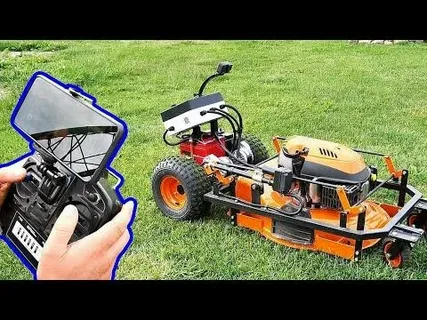
Maintaining a neat and well-groomed lawn is essential for any homeowner. With advancements in technology, the way we mow our lawns has evolved significantly. Homeowners now face a choice between traditional mowers and modern innovations like remote controlled lawn mower. In this article, we will provide a detailed comparison to help you decide which option is best suited for your needs.
1. Overview of Lawn Mowers
Traditional Mowers
Traditional lawn mowers, available in gas, electric, and manual versions, have been the go-to choice for decades. These mowers require direct operation, either by pushing or riding, and typically involve physical effort.
Remote Controlled Lawn Mowers
Remote-controlled lawn mowers are an emerging innovation that allows users to control the mower from a distance using a remote or mobile app. Some advanced models even offer autonomous operation, similar to robotic vacuums, which can significantly reduce manual effort.
2. Ease of Use
Traditional Mowers:
Operating a traditional mower requires physical presence and effort. Pushing a mower over uneven terrain or slopes can be strenuous, particularly for larger lawns. Gas mowers require refueling, while electric models need charging or a constant power supply.
Remote Controlled Lawn Mowers:
Remote-controlled lawn mowers excel in convenience. You can operate them from a safe distance without any physical strain. Some models even handle complex terrains automatically, making them ideal for homeowners who prefer a hands-off approach.
3. Efficiency and Performance
Traditional Mowers:
Traditional mowers are highly effective for precise trimming and can handle dense or overgrown grass. Gas-powered mowers, in particular, provide powerful performance for large lawns.
Remote Controlled Lawn Mowers:
While remote-controlled lawn mowers offer convenience, their performance may vary depending on the terrain and grass density. High-end models perform almost as well as traditional mowers, but they may take longer to complete large areas compared to a gas-powered mower.
4. Safety Considerations
Traditional Mowers:
Manual operation exposes users to potential hazards, such as blade contact or debris thrown by the mower. Proper safety gear and caution are essential.
Remote Controlled Lawn Mowers:
Remote-controlled mowers reduce direct contact with blades, enhancing safety. Advanced sensors in some models can detect obstacles and prevent accidents, making them a safer alternative for families and pets.
5. Cost Comparison
Traditional mowers tend to have lower upfront costs, particularly basic push or electric models. However, maintenance and fuel costs can add up over time. Remote-controlled lawn mowers are more expensive initially but can save time and effort, which may justify the higher investment.
6. Environmental Impact
Gas-powered traditional mowers produce emissions, while electric versions are more eco-friendly. Remote-controlled lawn mowers are often electric and energy-efficient, making them a greener choice for environmentally conscious homeowners.
Conclusion
When choosing between a remote controlled lawn mower vs. traditional mowers, the decision comes down to convenience, budget, and lawn size. Traditional mowers remain reliable for performance and precision, while remote-controlled mowers offer a modern, labor-saving alternative. Evaluating your specific needs will help you determine which mower best fits your lawn care routine.
